Commercial HVAC Installation Cost: Factors, Breakdown, Calculation, and Tips
Delving into the realm of commercial HVAC installation cost, this introductory passage aims to captivate readers with a blend of knowledge and originality. From factors influencing costs to strategies for reducing expenses, this discussion promises to be informative and engaging.
Exploring the nuances of commercial HVAC installation cost, this paragraph sets the stage for a comprehensive look at the intricacies involved in determining the total expenses.
Factors influencing commercial HVAC installation cost

When considering the installation of a commercial HVAC system, several factors can influence the overall cost. These factors include the size of the building, the complexity of the HVAC system, and the energy efficiency requirements.
Size of the building
The size of the building plays a crucial role in determining the cost of installing an HVAC system. Larger buildings require more extensive ductwork, more powerful units, and additional components to effectively heat or cool the space. As a result, the installation cost for a commercial HVAC system in a larger building will be higher compared to a smaller structure.
Complexity of the HVAC system
The complexity of the HVAC system also impacts the overall installation cost. Complex systems that involve intricate ductwork, zoning capabilities, or specialized equipment will require more time and labor to install. Additionally, systems with advanced features or technology may come at a higher price point, further increasing the installation expenses.
Energy efficiency requirements
Energy efficiency standards and requirements set by regulatory bodies can influence the cost of installing a commercial HVAC system. Systems that meet higher energy efficiency standards may come with a higher initial cost but can result in long-term savings on energy bills.
Additionally, the installation of energy-efficient components or systems may require specialized expertise and materials, contributing to the overall installation cost.
Cost breakdown of a commercial HVAC installation
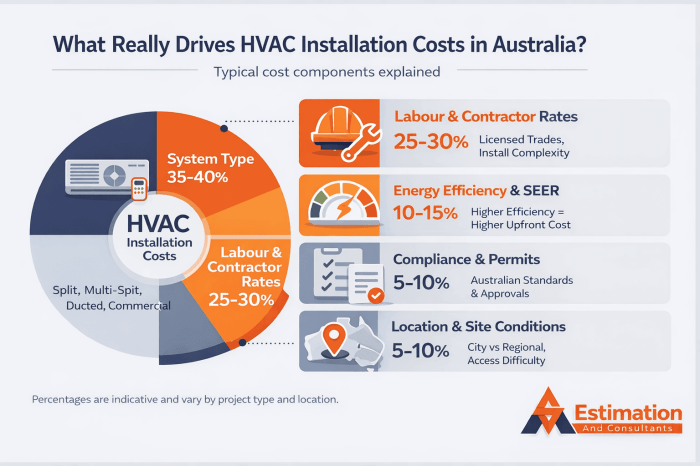
When considering the cost breakdown of a commercial HVAC installation, it's important to understand the various components that contribute to the total cost. This includes not only the equipment itself but also the labor costs involved in the installation process.
Additionally, the choice of HVAC system type can greatly impact the overall installation cost.
Components contributing to the total cost
- Cost of HVAC equipment: This includes the price of the heating and cooling units, thermostats, ductwork, and any other necessary components.
- Permit fees: Depending on local regulations, permit fees may need to be paid for the installation of a commercial HVAC system.
- Insulation materials: Proper insulation is crucial for efficient HVAC operation, so the cost of insulation materials should be factored in.
- Electrical work: Wiring and electrical components are essential for the functioning of the HVAC system, adding to the total installation cost.
Labor costs involved
- Installation labor: HVAC technicians or contractors will need to be hired to install the system, with labor costs varying based on the complexity of the installation.
- Testing and commissioning: After installation, the system must be tested and commissioned to ensure it is working correctly, adding to the labor costs.
- Maintenance training: Some contractors may include training for maintenance staff in the labor costs to ensure proper upkeep of the system.
Impact of HVAC system type
- Ducted vs. ductless systems: Ducted systems typically require more materials and labor for installation, resulting in higher costs compared to ductless systems.
- Energy efficiency: High-efficiency HVAC systems may have a higher upfront cost but can result in long-term savings on energy bills, affecting the overall installation cost.
- System size: Larger HVAC systems will naturally cost more to install due to the increased equipment and labor required for installation.
Calculating the total cost of a commercial HVAC installation

When estimating the total cost of a commercial HVAC installation, it is crucial to consider various factors that contribute to the overall expenses. This includes accurately estimating material costs, factoring in labor costs and installation fees, as well as accounting for additional expenses such as permits, inspections, and maintenance.
Estimating Material Costs
Accurately estimating material costs is essential in calculating the total cost of a commercial HVAC installation
Additionally, prices of materials can vary based on quality, brand, and market conditions. To get a precise estimate, it is recommended to consult with HVAC suppliers or contractors for pricing details.
Factoring in Labor Costs and Installation Fees
Labor costs and installation fees are significant components of the total cost of a commercial HVAC installation. These expenses encompass the wages of HVAC technicians, contractors, and other professionals involved in the installation process. The complexity of the installation, the duration of the project, and the labor rates of the workers will impact labor costs.
Installation fees may also include charges for equipment rental, transportation, and overhead expenses. To calculate labor costs accurately, it is advisable to obtain quotes from multiple HVAC companies and compare their pricing.
Additional Costs: Permits, Inspections, and Maintenance
In addition to material and labor costs, there are other expenses to consider when calculating the total cost of a commercial HVAC installation. Permits and inspections are necessary requirements for HVAC installations in many jurisdictions. These costs can vary depending on the location and the scope of the project.
It is essential to budget for permit fees and inspection charges to ensure compliance with local regulations. Furthermore, ongoing maintenance costs should be factored into the total cost. Regular maintenance helps prolong the lifespan of the HVAC system and prevent costly repairs in the future.
Tips for reducing commercial HVAC installation costs

Reducing commercial HVAC installation costs is crucial for businesses looking to save money while ensuring optimal performance of their HVAC systems. By implementing various strategies and practices, companies can effectively lower installation expenses and long-term maintenance costs.
Optimizing HVAC System Design
One way to reduce commercial HVAC installation costs is by optimizing the design of the HVAC system. This involves working closely with HVAC engineers to develop a system that is efficient and cost-effective. By designing a system that is tailored to the specific needs of the building, businesses can avoid unnecessary expenses and ensure maximum energy efficiency.
Benefits of Regular Maintenance
Regular maintenance of the HVAC system can significantly reduce long-term installation costs. By scheduling routine inspections and servicing, businesses can identify and address potential issues before they escalate into costly repairs. Additionally, proper maintenance can help improve the overall efficiency of the system, leading to lower energy consumption and operational costs.
Negotiating with Contractors and Suppliers
Another effective way to reduce commercial HVAC installation costs is by negotiating with contractors and suppliers. Businesses should obtain multiple quotes from different providers and compare prices to ensure they are getting the best deal. Additionally, negotiating payment terms and exploring financing options can help companies save money on upfront installation costs.
Epilogue

In conclusion, the journey through the landscape of commercial HVAC installation cost unveils a tapestry of factors, breakdowns, calculations, and cost-saving tips. With a newfound understanding, navigating the realm of HVAC installations is bound to become a more informed and efficient endeavor.
Top FAQs
How does the size of the building impact commercial HVAC installation cost?
The larger the building, the more extensive the HVAC system required, leading to higher installation costs.
What are some strategies for reducing commercial HVAC installation costs?
Optimizing HVAC system design, regular maintenance, and negotiating with contractors and suppliers can help lower installation expenses.
How can energy efficiency requirements influence installation expenses?
Meeting energy efficiency standards may require more advanced HVAC systems, leading to higher installation costs.
What are the additional costs involved in commercial HVAC installation?
Additional costs may include permits, inspections, and ongoing maintenance to ensure system efficiency.